Bots and Bitcoin-like mining are behind the current issues.
Many thought that Solana’s congestion issues were behind it, but the network has something different to say.
On April 4, more than 75% of transactions on Solana were unsuccessful, topping the network’s previous all-time high of 70% registered the previous day.
The figures refer to non-vote transactions, which are SOL movements between Solana accounts, likely between bots that are spamming the network in search of arbitrage opportunities. According to a Dune dashboard, more than 50% of transactions on April 4 were created by bots, in what appears to be an ongoing problem in the Solana ecosystem.
Matías Barrios, security researcher for Solana, thinks it’s difficult to end spam on the network because transactions have a fixed cost. He explained to The Defiant that “a simple or complex action on the network costs the same for a user,” leading inevitably to spam.
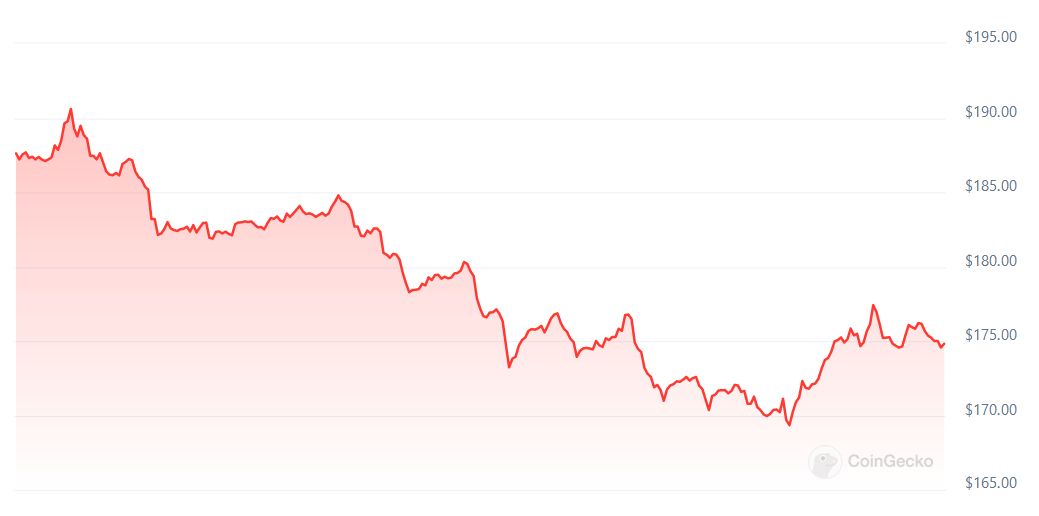
SOL, the network’s native token, has plummeted nearly 7% today, trading for $174. That said, the token has been on a rocketship since last year, gaining more than 700% since April 2023.
Solana has been dealing with an inordinate amount of network activity in recent months, most of it fuelled by memecoins. After substantial work since early 2023, along with overcoming its ties to the now-defunct FTX exchange, which caused a 70% drop in TVL, the ecosystem revived itself, surging to the top 5 by market cap on Coingecko.
Decentralized exchanges on Solana have skyrocketed in activity, topping all-time highs in March, when the ecosystem processed $59 billion of DEX trades.
Bitcoin-like Mining
April 4 also saw the arrival of a Bitcoin-like mining protocol on Solana.
Dubbed Ore, it uses the same idea behind Proof of Work, where a miner solves a cryptographic problem to secure the network, earning tokens in return.
Start for free
Ore miners can take home a share of 1 ORE per minute, distributed by the number of “puzzles” they each solve.
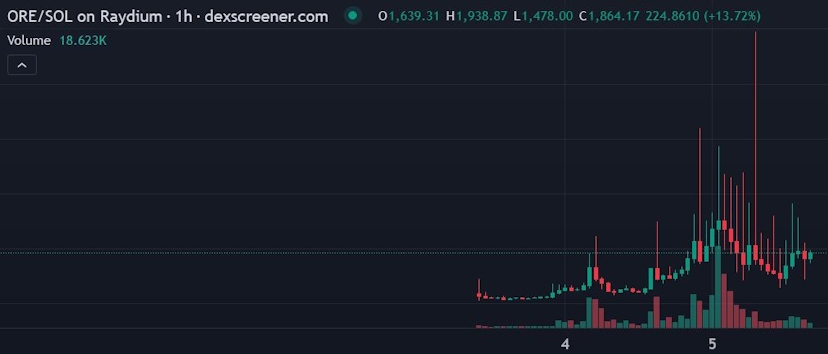
Activity on Solana exploded with Ore, sending the token from a near-zero price to nearly $10,000 per Ore. The token currently trades for $1,879.
“Bots Spam Better”
Mert Mumtaz, CEO of Helius Labs, a Solana-based developer platform, claims that the large amount of unsuccessful transactions shows that the system “allows for too much spam with negligible economic activity.”
He added that bots spam better than humans, “so users get the worst end of the stick and get dropped the most,” which yesterday’s transaction count highlighted.
According to Mumtaz, the only way “to win” is to spam better or to add better incentives and fee markets so bots can’t game the system.
Barrios also pointed out that Solana’s infrastructure is prepared for high throughput, even if it is facing issues today. According to the security researcher, an upcoming update will introduce priority fees, helping to assuage the problem.
Does Solana Scale?
But Solana’s troubles are far from over, according to Austin Federa, who leads strategy for the Solana Foundation.
Federa said on X on April 5 that users should expect congestion to continually increase, which will require more work to scale up systems to meet this demand.
“This is what scaling looks like; it’s not a one-and-done operation. But time and time again, the diverse group of core contributors to this network have shown Solana does, in fact, scale,” Federa concluded.
Credit: Source link