Bitcoin’s aggressive break below $70,000 has shifted the market from a debate over dip-buying to a more defensive question of how far traders now need to insure against the next leg lower.
Data from CryptoSlate showed that the largest cryptocurrency fell to as low as $65,404 over the past day, triggering $1.8 billion in liquidations and wiping out bullish leverage that had built around hopes of a quick recovery.
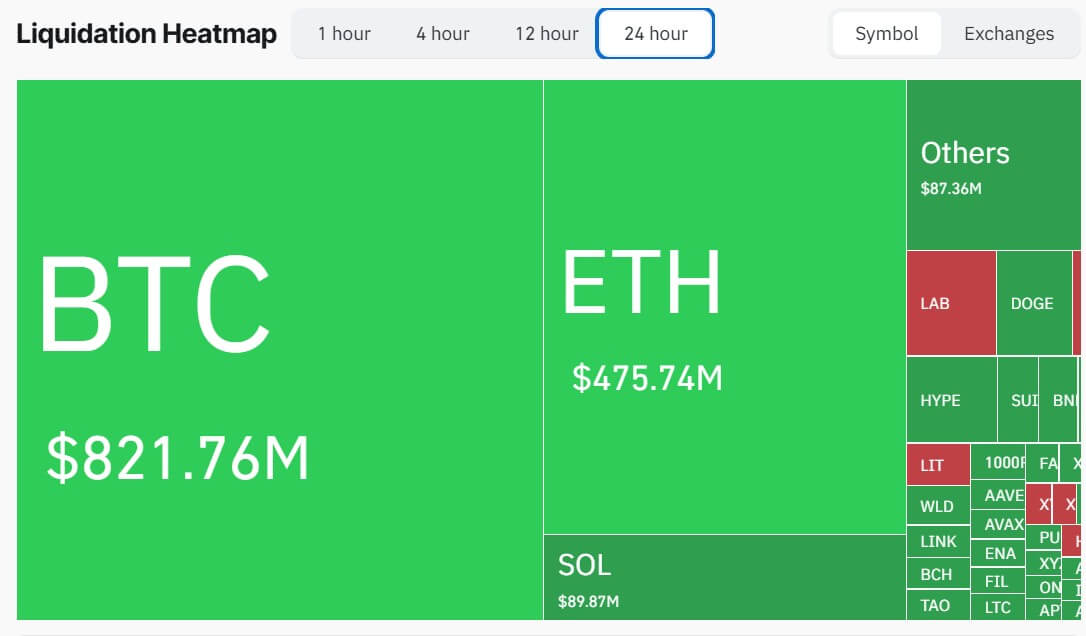
This failed rebound has pushed traders toward protection at levels that only recently looked distant.
Options positioning now shows demand building around the $60,000 and $50,000 strikes, a sign that investors are preparing for a deeper reset as Strategy’s first Bitcoin sale in years, ETF outflows, AI-driven capital rotation and unresolved macro pressure weaken the sources of support that carried the market earlier in the year.
How BTC’s failed bounce turned $70,000 into resistance
Analysts at BIT Official noted that Bitcoin was already trading defensively after sliding towards $72,000 last week, when geopolitical tensions tied to the Strait of Hormuz prompted a broad retreat from risk assets.
The firm noted that a brief reprieve materialized after President Donald Trump suggested the US would lift a naval blockade, while April core PCE inflation aligned with expectations at 3.3% year-over-year.
This data and political development eased immediate macroeconomic anxieties and forced over-leveraged bears to cover their shorts.
As a result, Bitcoin briefly spiked toward $73,400 over the weekend, giving bulls leverage to argue the selloff was exhausted.
However, that narrative collapsed when the recovery failed to attract meaningful spot volume.
When Iran’s foreign ministry explicitly denied nuclear talks, disputed Trump’s uranium claims, and insisted the strait would reopen strictly on its own timeline, the geopolitical relief trade vanished. Without a formal de-escalation, Bitcoin was left entirely exposed.
Consequently, the market was quickly dragged back to $70,000, which is a critical juncture where options positioning, market psychology, and short-term holder cost bases converged.
Indeed, that level had served as both a psychological floor for bulls and a prime target for bears hunting for forced liquidations.
Once Bitcoin sliced through that support, automated liquidation engines began aggressively unwinding undercollateralized long positions.
The decline further accelerated rapidly into a vacuum, as spot buyers proved unwilling to absorb the selling pressure.
Strategy’s sale gives bears a cleaner script
BTC’s decline under $70,000 also came at a highly vulnerable moment when the corporate treasury narrative fractured.
This week, Strategy confirmed that it sold 32 BTC for $2.5 million to fund cash distributions and dividend payments on its high-yield perpetual preferred stock.
The sale came as a shock to the market because Strategy had positioned itself as the definitive corporate proxy for the Bitcoin accumulation trade.
Over the past years, the Michael Saylor-led company business model relied heavily on equity issuance, preferred stock, and uninhibited access to capital markets to construct the largest public-company Bitcoin treasury in existence.
To the broader market, the company was not just a major holder but also a symbol of permanent, price-agnostic demand.
However, that perception is now under enormous strain as the firm most synonymous with the “never sell” philosophy liquidated coins to meet a routine cash obligation.
Jeff Dorman, the CIO of Arca, noted:
“From a sentiment standpoint, how do you think the average Bitcoin investor is going to react when every major news outlet and social media influencer starts writing that “MicroStrategy is now a seller of BTC”? This company has bought over $50 bn of Bitcoin, and currently owns roughly 4% of the total 21 million outstanding.”
That pivot armed bears with a clean, simple argument right as Bitcoin slipped below major support.
Market observers argued that the sale complicates the market’s base-case assumption that Strategy will act as an uninterrupted buyer in all macroeconomic environments.
In fact, some have postulated that the firm could make more sales in the future in order to actively manage its balance sheet.
AI’s liquidity pull leaves Bitcoin without its ETF cushion
This structural shift in sentiment coincides with the evaporation of Bitcoin’s most reliable safety net: the institutional ETF bid that anchored the earlier stages of the bull run.
According to SoSoValue data, Bitcoin ETFs have bled more than $4 billion over the trailing four weeks. This marks the most aggressive redemption cycle since the spot products debuted, starving the market of the steady inflows required to absorb routine selloffs.
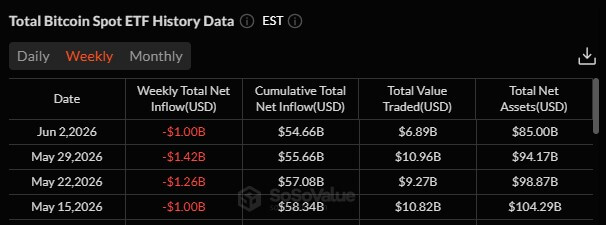
Market analysts attribute this severe capital flight to a generational rotation into artificial intelligence.
Institutional allocators are actively liquidating crypto positions to free up dry powder for a looming wave of tech mega-IPOs, primarily targeting high-growth ventures like SpaceX, Anthropic, and OpenAI.
Pierre Rochard, CEO of the Bitcoin Bond Company, pointed out that this AI boom has added $19 trillion in market capitalization to the top 50 public equities over the past 12 months, roughly 13 times Bitcoin’s total market value.
He said that capital expenditure cycle is drawing liquidity and attention away from Bitcoin, making the asset’s resilience notable despite the pressure.
Independent Bitcoin analyst Matthew Case described the move as an “AI IPO liquidity vacuum,” arguing that institutions that rode Bitcoin and crypto exposure higher now have a rare chance to position for major private-market and pre-IPO opportunities tied to SpaceX, Anthropic and OpenAI.
This capital rotation aggressively starves Bitcoin of its marginal buyer. During periods of robust ETF inflows, institutional demand acts as a shock absorber, cushioning the blow from macroeconomic friction, geopolitical headlines, and derivatives volatility.
With that bid suddenly sidelined, the market is dangerously exposed; a standard technical decline can cascade much further before encountering strong spot support.
$60,000 becomes the market’s next insurance level
Consequently, traders have fundamentally repriced their risk models. The market is no longer structured around highly leveraged bets anticipating a swift return to $70,000.
Instead, capital is aggressively repositioning for the reality that Bitcoin’s next durable line of defense may reside significantly lower.
Deribit data shows traders have built roughly $1.2 billion in open interest around the $60,000 strike, while the $50,000 strike has attracted about half that amount. Cumulatively, $1.8 billion worth of open interest are situated at these strike prices.
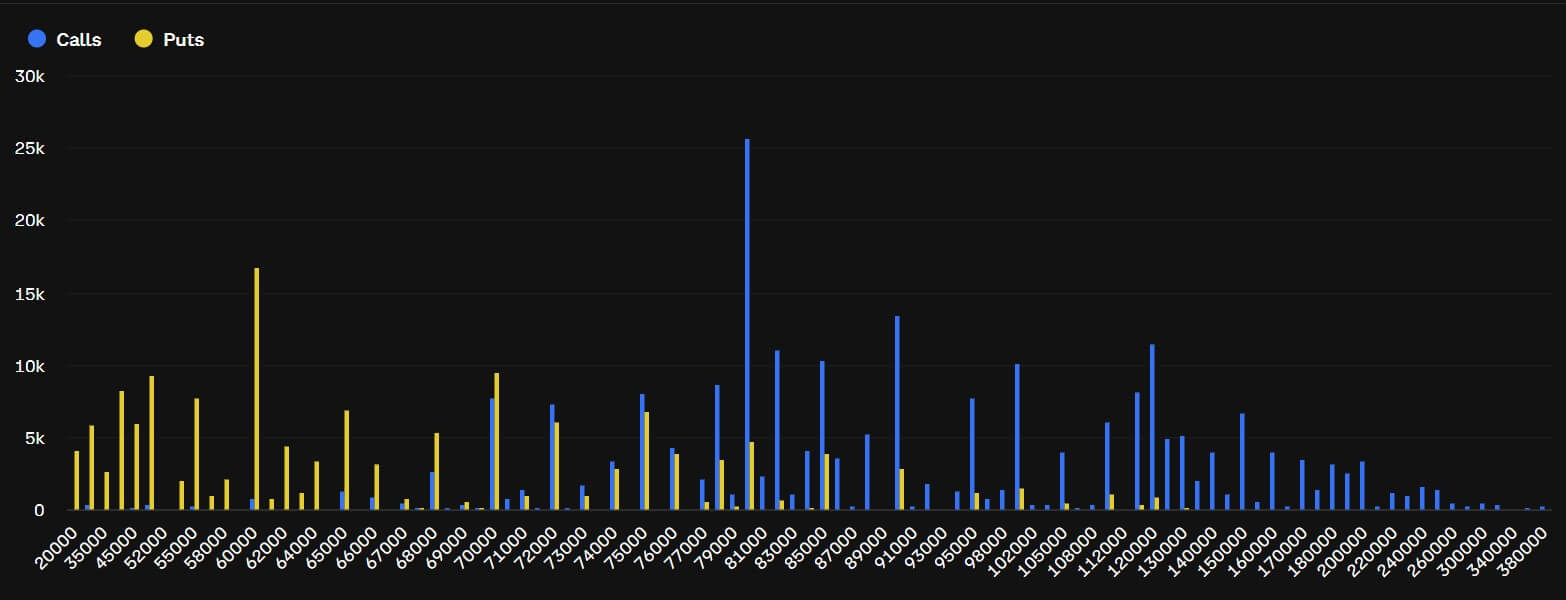
The positioning marks a change from the structure that dominated earlier in the rally. When ETF inflows were strong and Strategy remained an unquestioned buyer, pullbacks were treated as opportunities to add exposure.
After the liquidation wave, ETF redemptions and Strategy’s sale, the same pullbacks are being treated as events that need to be insured.
As a result, traders with material Bitcoin exposure are moving toward puts and collar structures designed to preserve some upside while limiting losses if the drawdown accelerates.
Credit: Source link