CME Group CEO Terrence Duffy announced Wednesday that the exchange operator will file a federal lawsuit against the CFTC, targeting the regulator’s late-May approval of bitcoin perps for prediction-market platform Kalshi, the first regulated U.S. listing of perpetual futures.
Duffy’s central argument, made on CNBC’s Fast Money, is that the products the CFTC approved as futures are legally swaps under the Dodd-Frank Act, and that the agency overstepped its authority in fast-tracking them without adequate review.
The stakes extend well beyond Kalshi. Duffy stated on air that CME holds exclusive licensing agreements with every major benchmark provider whose indexes underpin crypto derivatives pricing.
If perpetual futures are reclassified as swaps in court, any platform offering them would need to route through CME’s licensing framework regardless of how their products are labeled, a structural outcome that would effectively block Kalshi, Coinbase, and Kraken from operating U.S. perp markets outside CME’s terms.
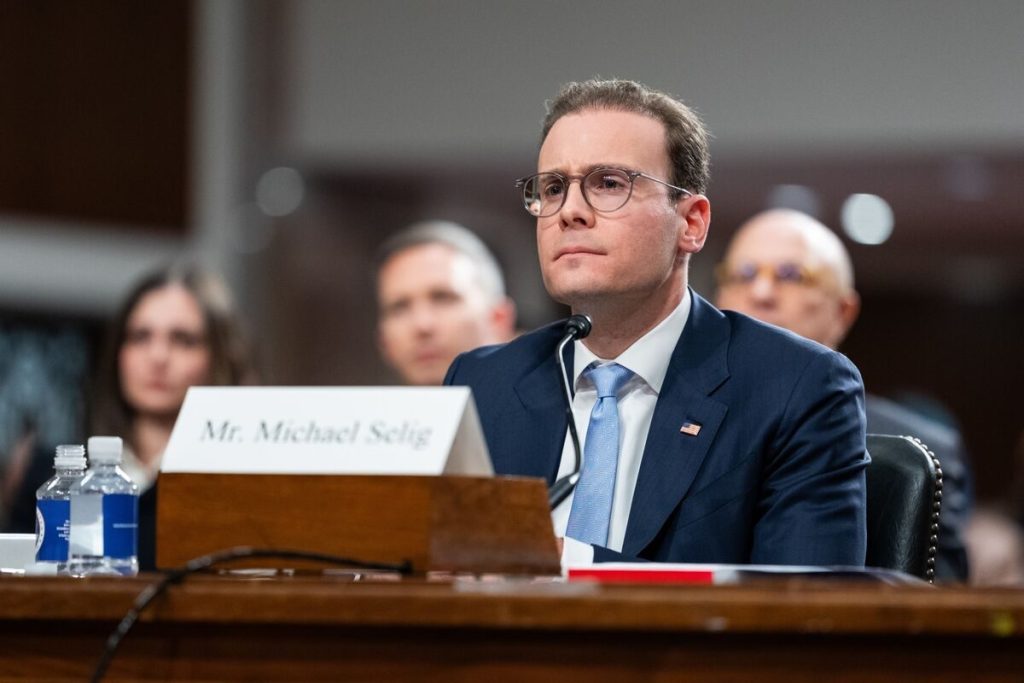
CFTC Chair Michael Selig defended the approval earlier the same week, telling CNBC it was “time to approve regulated futures contracts that have no expiration date,” while a CFTC spokesperson dismissed the threatened lawsuit as frivolous.
The broader regulatory context matters here. Legislators are simultaneously debating the scope of CFTC jurisdiction over crypto through vehicles like the CLARITY Act currently moving through the Senate, which would formalize CFTC authority over digital commodity derivatives – making the outcome of CME’s lawsuit directly relevant to how that legislative framework gets applied in practice.
Discover: The Best Token Presales
CME Duffy Core Argument: Why Perpetual Futures Are Swaps Under Dodd-Frank
The legal framing is specific and worth unpacking. The Dodd-Frank Act draws a hard line between futures and swaps in the Commodity Exchange Act: a futures contract involves delivery or cash settlement at a defined expiration date, while a swap involves two parties continuously exchanging payments based on an underlying reference rate.
Perpetual futures have no expiration date. Instead, they use a funding-rate mechanism, periodic payments between long and short holders, to keep the contract price anchored to spot. That mechanism, Duffy argues, is structurally identical to a swap under the statute.
Duffy stated the case plainly in his CNBC appearance: “Under the Dodd-Frank Act, it clearly defines what a swap is and what a future is, and when there’s two parties exchanging payments to each other, that’s deemed a swap.
So, if anything, these products that he supposedly approved as futures are not futures, they would be swaps, and if they’re swaps, and let’s say, as you know, there are different requirements in order to participate in the swap market.”
The classification carries real consequences: swaps participants face stricter eligibility requirements, higher capital thresholds, and different reporting obligations than futures market participants.
CME’s second front is procedural. Market lawyers quoted in early coverage expect the lawsuit to include an Administrative Procedure Act challenge, arguing the CFTC relied on expedited self-certification and abbreviated review for what the agency itself has described as a novel and complex product class,without the full notice-and-comment rulemaking that complexity typically demands.
Duffy reinforced the procedural critique directly, accusing the CFTC of describing a 24/7 trading release as a formal rule when it was not, saying he believed “to an extent” the agency was misrepresenting facts.
Discover: The Best Crypto to Diversify Your Portfolio
CFTC Chair Selig Calls the Lawsuit Frivolous: Here’s the Regulator’s Case
Selig’s position is that the CFTC has clear statutory authority to approve futures contracts on commodity indexes, and that a well-structured perpetual futures contract, with a defined reference rate, margining requirements, and daily settlement, qualifies as exactly that.
The agency’s framing sidesteps the no-expiry objection by pointing to the daily settlement mechanic as functionally equivalent to the roll that occurs in dated futures, satisfying the Commodity Exchange Act’s “future delivery” requirement at least in economic terms.
Whether that construction holds up to the Dodd-Frank swap definition in federal court is the central legal question the case will force into the open.
The CFTC also has a political tailwind: the current regulatory posture across Washington has been broadly pro-crypto-access, and fast-tracking onshore perp listings aligns with the administration’s stated goal of pulling derivatives volume back from offshore, unregulated venues.
Derivatives lawyers quoted across coverage have noted that the case could function as a test of the entire CFTC product-approval framework for crypto, putting the futures-swap boundary under the kind of federal-court scrutiny it has never faced in the context of crypto derivatives specifically.
Commentators in the ongoing regulatory classification disputes around the Clarity Act have drawn direct parallels to this case, noting that definitional line-drawing by agencies has repeatedly ended up in litigation.
The post CME Move To Sue CFTC Over Crypto Perpetual Futures: Here’s Why appeared first on Cryptonews.
Credit: Source link