
Crypto spent years and a reported fortune in lobbying money chasing one thing: a federal rulebook. This week it lost that fight in the US Senate. Then, three days later, Bitcoin jumped 6% for reasons that had nothing to do with Washington at all. Both facts matter, and they point in opposite directions.
What Happened to the Clarity Act in the Senate Vote?
The Digital Asset Market Clarity Act failed to reach the 60 votes needed to advance in the Senate, ending months of negotiation with a tally that did not even produce a simple majority. Only 49 senators voted yes. Fifty voted no, including every Democrat and four Republicans.
The bill was not a minor housekeeping measure. It would have built a framework for digital assets, split oversight between the SEC and the CFTC, set registration requirements and tightened anti-money-laundering protections. Critics objected that handing the smaller CFTC the bulk of the authority was the industry’s way of dodging serious scrutiny, a claim crypto executives rejected.
Republican leadership tried to save it at the last minute. A revised version released on Sunday added new ethics restrictions aimed at Democratic concerns about public officials profiting from crypto. It was not enough.
The bill’s main architect was blunt afterwards. Senator Cynthia Lummis said “I think we’re done. It’s over,” noting the team had already conceded more than 120 Democratic requests. Asked whether the bill would return to the floor, she said no.
Why Are Crypto Insiders Blaming Trump for the Clarity Act Failure?
This is the part that shifted over the last 24 hours. The industry’s first instinct was to blame Senate Democrats. By Friday, the finger-pointing had rotated toward the White House.
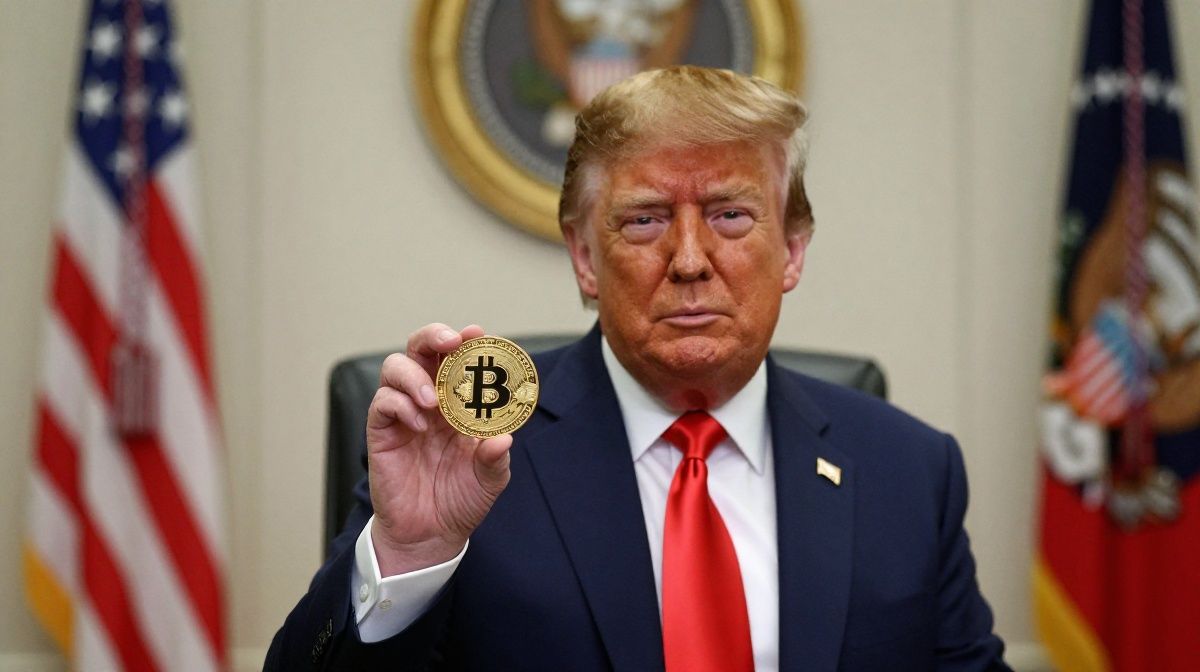
A growing debate inside the industry now centres on whether Trump’s own crypto ventures turned a market-structure bill into a referendum on presidential ethics. Trump generated roughly $1.4 billion in income from crypto ventures last year. Paradigm senior adviser Justin Slaughter put it directly: “The failure of Clarity begins and ends with Donald Trump,” singling out the meme coin launched just before his inauguration.
The opposition made the same argument from the other side of the aisle. Senator Elizabeth Warren dismissed the final Republican ethics offer as a weak fig leaf that would not stop the president from earning his next $1.4 billion in crypto profits.
And it was not only an ethics fight. Community bank leaders lobbied hard against the bill, largely over a provision that would have let stablecoin issuers pay interest to customers. Banks argued that would let crypto firms compete for deposits without carrying bank-level regulation. Ethics gave Democrats a reason to vote no. Banking gave a handful of Republicans one.
Why Did the Bitcoin Price Rise Instead of Falling?
Textbook logic says a dead regulatory bill is bearish. The market did sell off, briefly. $Bitcoin slid to a September low near $75,560 on Tuesday as rising global bond yields and higher oil prices squeezed risk assets. In the 24 hours after the vote, $XRP dropped 8.5%, $Ethereum fell 2.9% and Solana lost 3.3%.
Then Friday happened. Bitcoin gained 6% at the Wall Street open, printing a local high of $81,034 on Bitstamp as oil-supply fears pushed US bond yields back up. Traders sitting in short positions above spot got run over: CoinGlass data showed roughly $250 million in cross-crypto short liquidations in about four hours.
The lesson is unflattering for Washington. A failed bill moved Bitcoin about 4%. A pipeline problem and a bond auction moved it 6% in the other direction.
How Are Oil and Bond Yields Driving the Bitcoin Price Now?
The macro backdrop is doing more work than crypto policy right now.
The US 30-year yield hit 5.34%, up 90 basis points, as oil uncertainty returned. WTI crude sank to around $94.80 before climbing back toward $98 during the Asian session. Rising yields across multiple countries have already pushed central banks, including in the US and Japan, to raise rates this week. The International Energy Agency has warned that prolonged restrictions on Gulf supply could mean higher prices and weaker demand if commercial inventories keep falling.
For levels, two numbers are worth pinning to your chart. Analyst Rekt Capital flags $82,000 as the breakout test, warning that a failure there would form a double rejection pattern alongside the mid-May top. Bitcoin has meanwhile reclaimed its True Market Mean at roughly $76,660, while the cost basis for corporate Bitcoin treasuries sits near $80,500. TradingView
Translation: $76,660 is the floor bulls want to defend, $80,500 is where corporate holders break even, and $82,000 decides whether this is a squeeze or a trend.
What Happens to Crypto Regulation Without the Clarity Act?
Nothing changes for holders overnight. No new rules, no new taxes, no new exchange obligations. But the rulemaking simply moves from Congress to the agencies, which is exactly what the industry spent years trying to avoid.
The SEC proposed a package called Regulation Crypto Assets on 18 August, which would let crypto startups raise up to $5 million over four years without full securities registration, plus a safe harbour so a token stops being treated as a security once its issuer finishes its promised work. SEC Chair Paul Atkins urged Congress to pass Clarity but made clear the agency would keep modernising securities regulation regardless of the vote.
The catch is durability. Rules written by a commission can be unwritten by the next one, and only Congress can hand the CFTC genuine spot-market authority. That is the difference between a framework and a favour.
The calendar is also brutal. The House is out until after the midterms and both chambers are in session for only about five more weeks in 2026. The bill could return next year, but much of it would need reworking, with Democrats widely expected to take the House. Polymarket had the odds of the bill becoming law in 2026 down at 7% by 16 September.
What Should Crypto Investors Watch Next?
Three things, in order of impact.
First, oil and yields. Crypto is currently trading as a high-beta macro asset, not a policy asset. Second, the SEC comment process on Regulation Crypto Assets, which is now the real venue for US crypto rules. Third, the November midterms, which determine whether a market-structure bill has any path at all in the next Congress.
And one uncomfortable takeaway for the industry: the president who promised to be crypto’s champion has become, in the view of some of its own senior figures, the single biggest obstacle to the rules it wanted most.