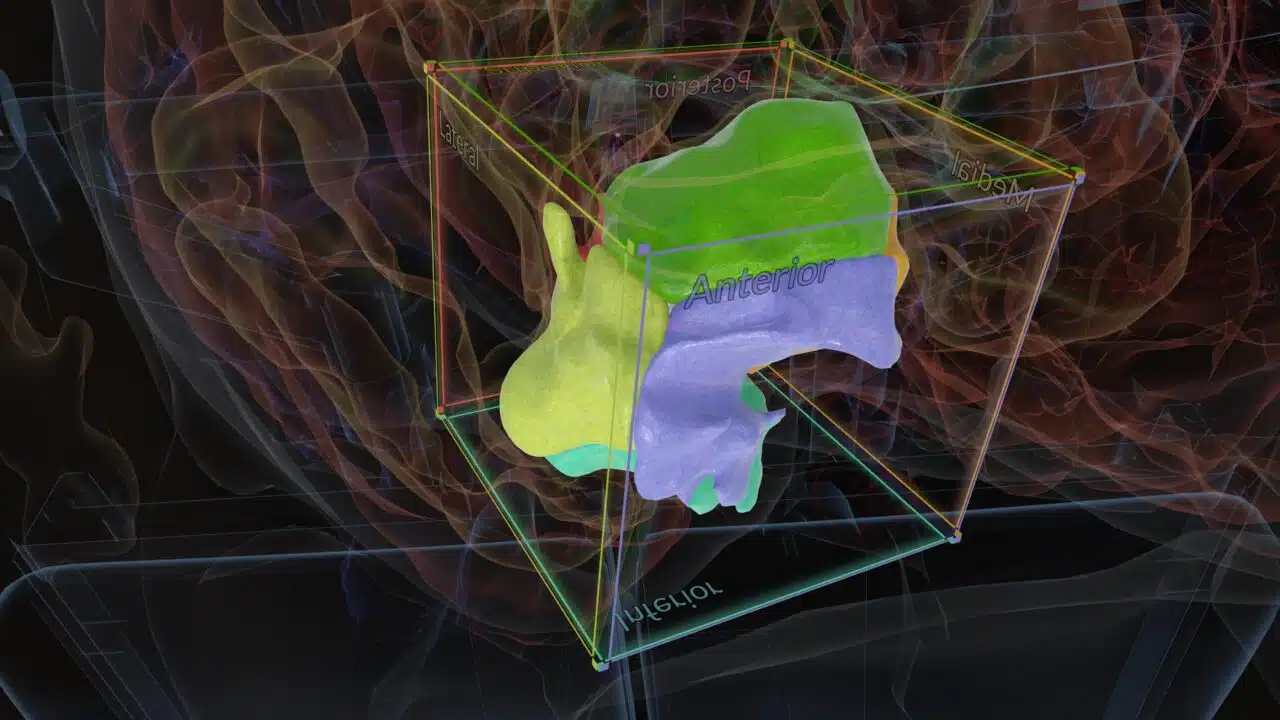
VR medical surgery training firm Atlas Meditech is training brain surgeons with greater depth and realism, using artificial intelligence (AI) and photorealistic, accurate simulations.
The company’s MONAI medical imaging framework tools, joined with NVIDIA’s Omniverse platform, empower surgeons to train before entering the operating room and rehearse complex procedures with AI and lifelike imagery.
Combined, the tools aim to boost surgical outcomes and safety for patients worldwide.
In an NVIDIA blog post, Dr Aaron Cohen-Gadol, Founder, Atlas Meditech and Nonprofit, Neurosurgical Atlas, explained the functionality of the platform.
He said,
“The Atlas provides a collection of multimedia tools for brain surgeons, allowing them to mentally rehearse an operation the night before a real surgery. With accelerated computing and digital twins, we want to transform this mental rehearsal into a highly realistic rehearsal in simulation”
Dr Cohen-Gadol also teaches at the Indiana University School of Medicine as a professor of neurological surgery.
For Neurosurgical Atlas, building case studies, 3D models, and surgical videos and content to over a million users online is key to its operations. Dr Cohen-Gadol estimates that over 90 percent of programmes for brain surgery training across the United States, along with other countries with tens of thousands of neurosurgery professionals, leverage Atlas Meditech’s technologies for residencies and early career training.
Additionally, Atlas’ Pathfinder software includes AI algorithms to recommend safe surgical pathways for neurosurgeons and medical professionals, leading to greater navigational skills in the brain to reach lesions.
NVIDIA Omniverse supports these technologies with its platform for developing and hosting 3D metaverse applications. With it, Atlas Meditech can build bespoke visualisations of patient breaks to rehearse surgeries before entering the theatre.
Atlas Meditech and the New OR
Atlas views advanced simulations as alternatives to costly brain surgeries on cadavers. With them, doctors can use the tools onscreen or with virtual reality headsets to tailor simulations for virtual surgeries.
This allows doctors unrivalled preparation for their operations, customised to the patient’s specifications, medical issues, lesion parameters, and others.
Dr Cohen-Gadol added,
“Every patient’s anatomy is a little different. What we can do now with physics and advanced graphics is create a patient-specific model of the brain and work with it to see and virtually operate on a [tumour]. The accuracy of the physical properties helps to recreate the experience we have in the real world during an operation.”
Atlas Pathfinder’s MONAI Label tool can also help radiologists annotate magnetic resonance imaging (MRI) and computerised tomography (CT) scans to detect tumours in the brain.
Dr Cohen-Gadol explained the use case further,
“MONAI Label is the gateway to any healthcare project because it provides us with the opportunity to segment critical structures and protect them. For the Atlas, we’re training MONAI Label to act as the eyes of the surgeon, highlighting what is a normal vessel and what’s a tumor in an individual patient’s scan.”
Atlas Pathfinder can use segmented views of a patient’s brain to adjust 3D models using a 1-to-1 digital twin of the patient’s brain. This allows surgeons to determine deformities in the patient’s brain caused by tumours.
Neurosurgeons can then map out the safest pathways to navigating to and removing tumours whilst preserving other sections of the brain. Doctors can then connect the approach to one on the Atlas website, complete with a written tutorial of outlined plans for each operation.
Dr Cohen-Gadol concluded: “AI-powered decision support can make a big difference in navigating a highly complex 3D structure where every millimeter is critical.”
NVIDIA Omniverse: Digital Twins for Patient Care
Using NVIDIA Omniverse, Atlas Meditech can develop virtual operating rooms to immerse neurosurgeons in photorealistic immersive environments to prepare for and trial future procedures.
With VR headsets, surgeons can modify patient and equipment positioning, interact in virtual environments, proceed with the operation incrementally, and receive feedback on their performance and adherence to target pathways.
AI algorithms also help medical professionals predict the shifting of brain matter as surgeons operate on the brain via simulation.
Dr Cohen-Gadol explained that the power to allow surgeons to “enter a virtual, 3D space, cut a piece of the skull and rehearse the operation with a simulated brain” similar to the patients was “tremendous.”
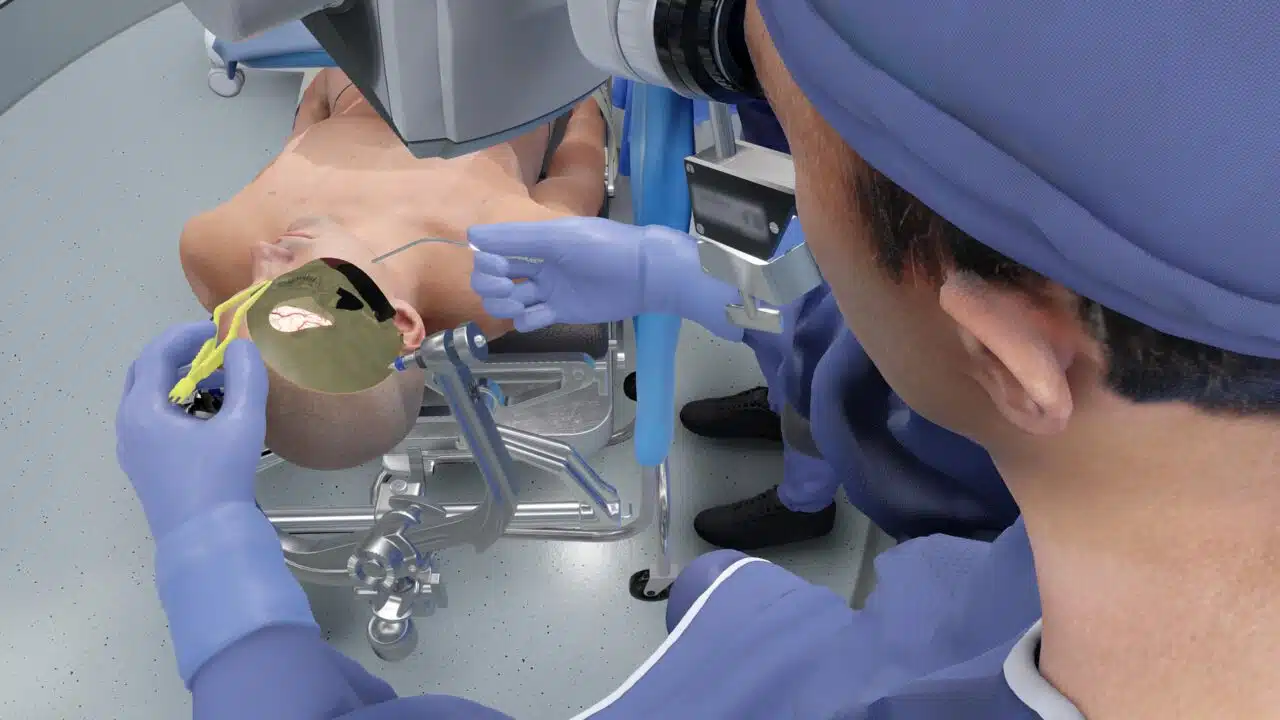
To ensure the fidelity of the neurological digital twins, Atlas Meditech has leveraged NVIDIA PhysX, which provides cutting-edge, real-time physics from the company’s Omniverse platform.
Medical teams could incorporate haptic devices to experiment with force feedback in virtual environments. With haptics, the company could simulate working with brain matter during the rehearsal.
The Future of Immersive Neurosurgery
For Dr Cohen-Gadol, AI models in the next few years will further enhance surgeries with greater insights into operational procedures. AI will be able to warn surgeons about key brain structures near the operating area, monitor and track medical instruments in the operating theatre, and guide doctors step-by-step in the surgery.
Atlas Meditech will also explore further NVIDIA’s Holoscan platform to stream AI applications. Doing so will facilitate real-time insights into surgical operations and provide AI-backed analyses of surgeons’ movements in a procedure.
Hospitals can also offer surgical teams feedback and evaluations on improving their processes and efficacy. Finally, neurological digital twins of the human brain and operating rooms could train ‘intelligent medical instruments’ like microscope robots using Isaac Sim, an Omniverse robotics simulation application.
The news comes after NVIDIA released groundbreaking Omniverse updates, including AI integrations for searching images, creating speech-to-text interfaces, and enhanced performance.
Credit: Source link