
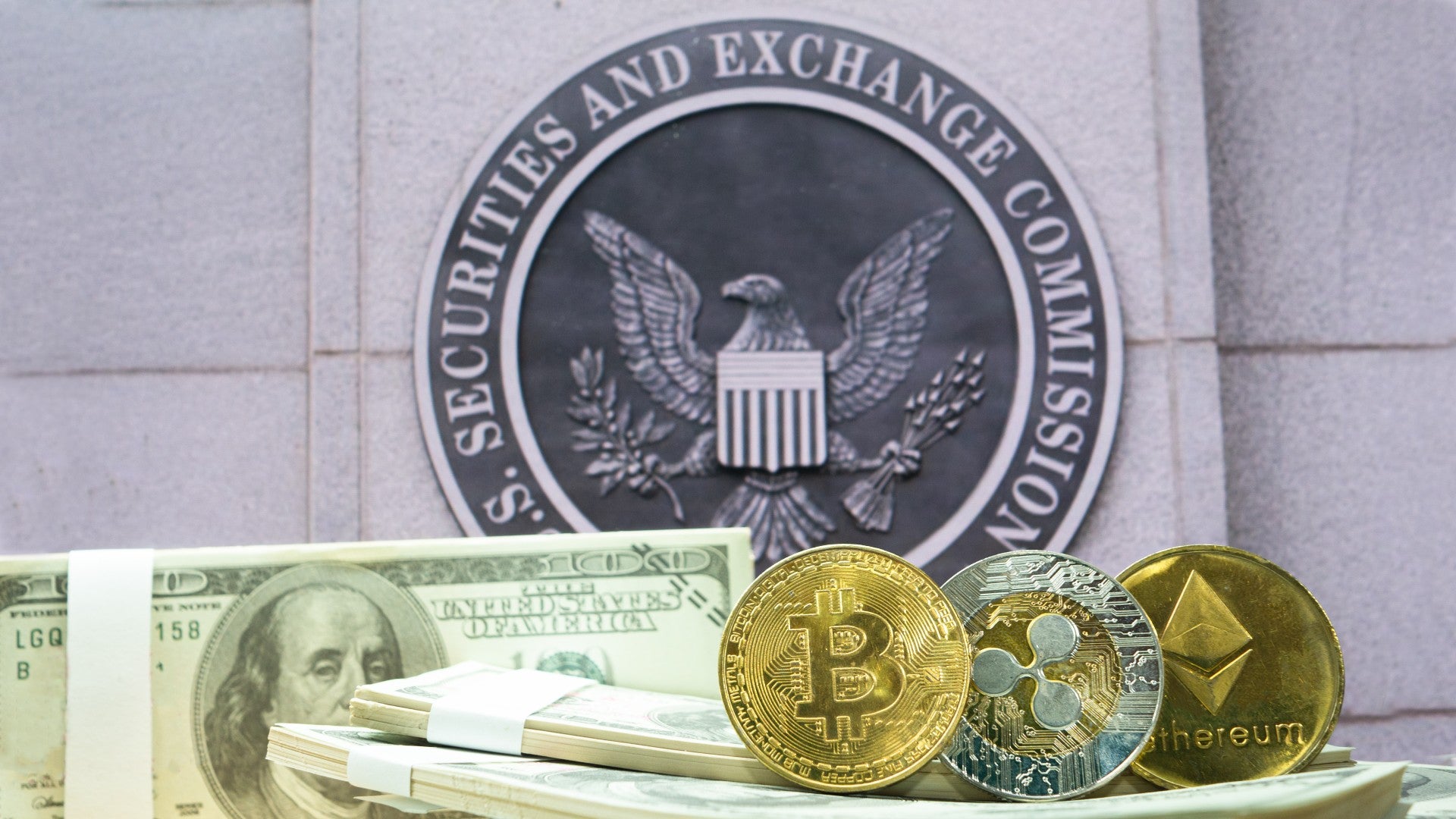
On 13 July, a shockwave went through the crypto community. Or rather, a Ripple: XRP, Ripple Labs’ flagship cryptocurrency offering, was ruled not to be a security in a New York district court. This may seem obvious, as market leading coin Bitcoin has long been classified as a commodity and therefore falls under the jurisdiction of the Commodities and Futures Trading Commission (CFTC).
The problem for companies that manage the blockchain technologies on which other coins are built is that the much stricter Securities and Exchange Commission (SEC) believes many of the remaining coins are theirs to control.
Ripple’s troubles began in 2020, when the SEC filed a suit against the company alleging that they had engaged in unregistered securities trading, raising over $1.3bn over a period of seven years. The case hinged not on whether their actions were legal under securities law – they were not – but whether the sales of the coin itself constituted securities and more specifically a type of security called an investment contract.
So, what are investment contracts?
This raises the question of what an investment contract actually is. It is, according to the Supreme Court, “a contract, transaction[,] or scheme whereby a person [(1)] invests his money [(2)] in a common enterprise and [(3)] is led to expect profits solely from the efforts of the promoter or a third party.”
As barrister Flavia Kenyon explained in an interview last year, the contention in the case of cryptocurrency lies in points two and three, as the aims and roles of users are varied enough that it is hard to describe it as a common enterprise and the profits potentially gained from holding a coin are not generally generated by the efforts of others.
The effect of the ruling seemingly being that the asset class of a coin is variable depending on how it is sold – and to whom – has been cause for both celebration and concern for those in the industry. On the one hand, it provides some degree of clarity on whether individual blockchain hosts have to declare their coins with the SEC, and gives Coinbase hope in their ongoing suit against the same: when they filed their motion to dismiss on 4 August, they cited the case as precedent.
On the other, it gives the SEC a greater foothold in the regulation of crypto, a move that may well see many more suits brought against crypto providers.
Trouble ahead
Unfortunately, the clarity hoped for after the resolution of the suit may not be so forthcoming. The most important caveat to the case, as Protos explained, is that the judge was not ruling on whether secondary market sales, namely through crypto exchanges, count as securities sales. These trades make up 99% of XRP transactions since 2017.
Whilst the ruling may well provide a line of defence in Coinbase’s trial, the outcome of its case is needed before any legal clarity can be provided on that front. The company declined a request to comment.
The other issue with treating Ripple’s partial victory as a precedent-setting one is that it was a district court that made the judgement, meaning other district judges are entitled to rule on similar cases however they see fit, even if they directly contradict the XRP ruling.
This exact problem arose on 1 August, when the judge in Terraform Labs vs. SEC denied a motion to dismiss from Terraform, another cryptocurrency provider. In the decision, Judge Rakoff – of the same Southern District of New York court as the judge in the Ripple case – explicitly states that “it may also be mentioned that the Court declines to draw a distinction between these coins based on their manner of sale, such that coins sold directly to institutional investors are considered securities and those sold through secondary market transactions to retail investors are not.”
The judgement itself is informative both as an overview of securities law and an insight into the future regulatory standards around crypto that the SEC wants. Rakoff asserts that even absent explicit statements or guidance on crypto-assets themselves, the recent history of high-profile suits brought by the SEC against crypto-asset providers “would have apprised a reasonable person working in the crypto-currency industry that the SEC considered some [italics his] crypto-currencies to be securities”.
In this case, then, as in the many others that Rakoff cites, the burden of compliance falls on the asset providers themselves. Given that these companies are facilitating – directly or not – millions if not billions of dollars-worth of trades, this position seems entirely reasonable, though clearly the firms being charged do not agree.
In the wake of this judgement, the SEC has also filed an appeal against the Ripple ruling.
Bad for everyone
Cryptocurrency is still relatively new: Bitcoin, the first major crypto, was only minted in 2009. Regulation, particularly around digital matters, is slow to change, and Congress is yet to provide official guidance on how exactly crypto should be governed. As evidenced by the alleged “turf-war” between the SEC and the CFTC (though both parties deny such a thing exists) and the disparate rulings in the same court less than a month apart, jurisdictions remain murky.
Although it may be fair to expect providers of coins to ensure their own compliance, the litany of cases over the last five years is proof enough that this won’t happen on its own. Until clear rules are set, be that through the legislative or judicial branch of the government, everyone suffers.
Crypto-asset providers will rightly fear lawsuits that could be applied retroactively, as in Coinbase’s case, reducing trust and investment in the market. Federal agencies are forced to spend time and money pursuing companies who claim, whether or not in good faith, that they were unaware of the asset class of their product. Most of all, though, investors in cryptocurrencies and blockchain endeavours face price instability, fraudulent offerings and loss of assets sometimes totalling billions.
The “Wild West” of the early crypto years may yet be tamed, but much like its historical counterpart, it is likely to happen slowly and with many casualties along the way.
Credit: Source link