Close Menu
  • Home
  • Crypto News
    • Bitcoin
    • NFT News
  • Metaverse
  • Defi
  • Blockchain
  • Regulations
  • Trading

Subscribe to Updates

Get the latest creative news from FooBar about art, design and business.

What's Hot

Sam Altman ChatGPT AI Predicts Wild Bitcoin Price by End of 2026

June 4, 2026

Bitcoin’s selloff is creating the short-heavy setup that could reverse it fast

June 4, 2026

Ethereum treasury giant offers 9.5% payout as BitMine paper losses top $8.5 billion

June 4, 2026
Facebook X (Twitter) Instagram
CredBit.com
  • Home
  • Crypto News
    • Bitcoin
    • NFT News
  • Metaverse
  • Defi
  • Blockchain
  • Regulations
  • Trading
Facebook X (Twitter) Instagram
CredBit.com
Home » Huobi seeing increased outflows to competitors according to new reliance metrics
Trading

Huobi seeing increased outflows to competitors according to new reliance metrics

August 30, 20233 Mins Read
Facebook Twitter WhatsApp Pinterest Telegram LinkedIn Tumblr Email Reddit VKontakte
Huobi seeing increased outflows to competitors according to new reliance metrics
Share
Facebook Twitter LinkedIn Pinterest Telegram Email

The downfall of FTX has underscored the counter-party risks that exchanges can impose on the market. As traders and investors tread with heightened caution, there’s an evident demand for reliable metrics to evaluate the health of these platforms.

Using the FTX data set as a benchmark, Glassnode has rolled out three innovative indicators designed to pinpoint high-risk scenarios among the major exchanges: Coinbase, Binance, Huobi, and the now-defunct FTX.

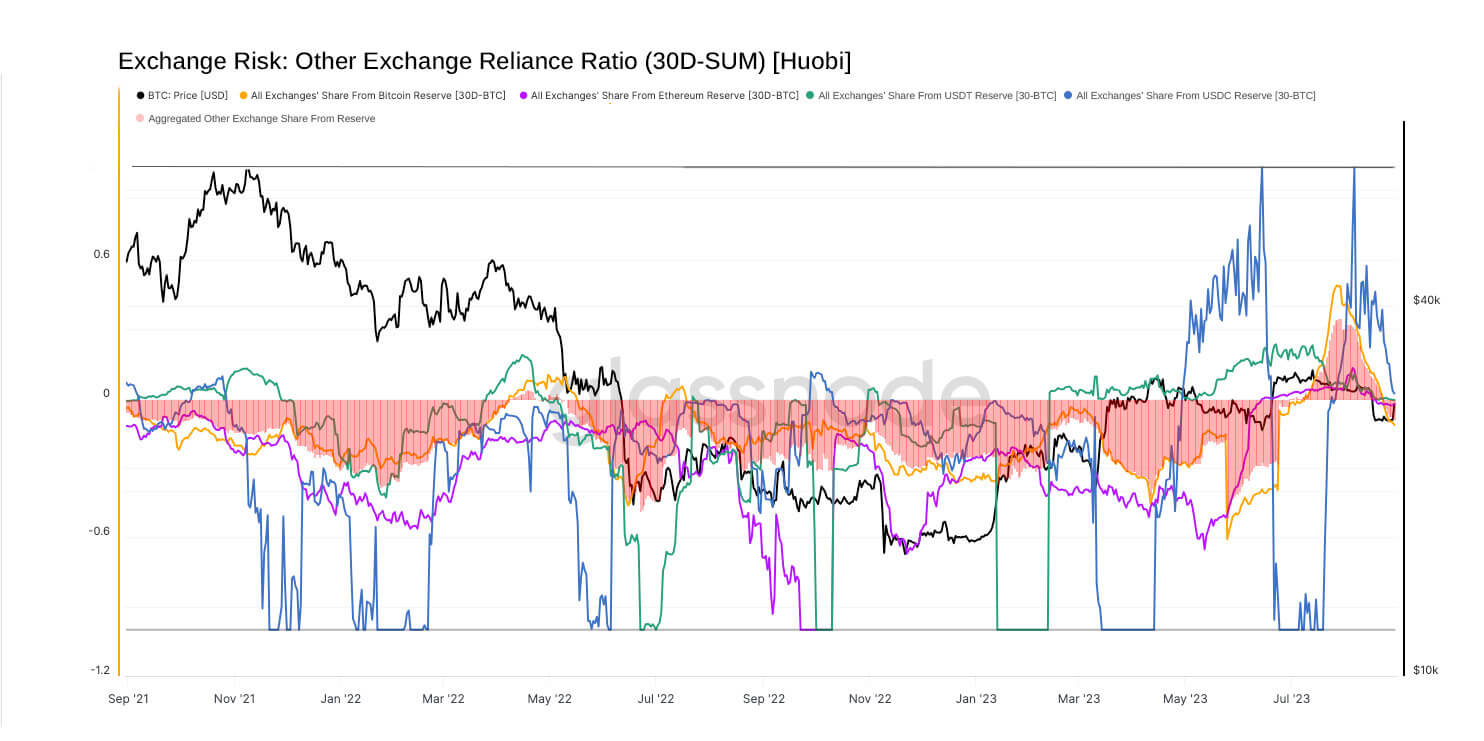
One of the indicators is the exchange reliance ratio, which shows when a significant portion of an exchange’s balance is regularly transferred to or from another exchange. A significant portion of an exchange’s balance being consistently moved to or from another platform might suggest a deep reliance or co-dependence on liquidity.

A positive ratio indicates net inflows to the exchange, while a negative one signifies net outflows. Prolonged periods of large negative values can be a red flag, indicating assets rapidly departing the exchange in favor of another platform.

While Binance and Coinbase exhibit a relatively low reliance ratio, indicating minor fund movements compared to their vast balances, Huobi’s data paints a different picture. Recent figures showed pronounced negative reliance ratios across all Huobi assets, indicating a marked increase in transfers from Huobi to other exchanges.

Graph showing the exchange reliance ratio from Huobi from Aug. 30, 2021, to Aug. 30, 2023.  (Source: Glassnode)

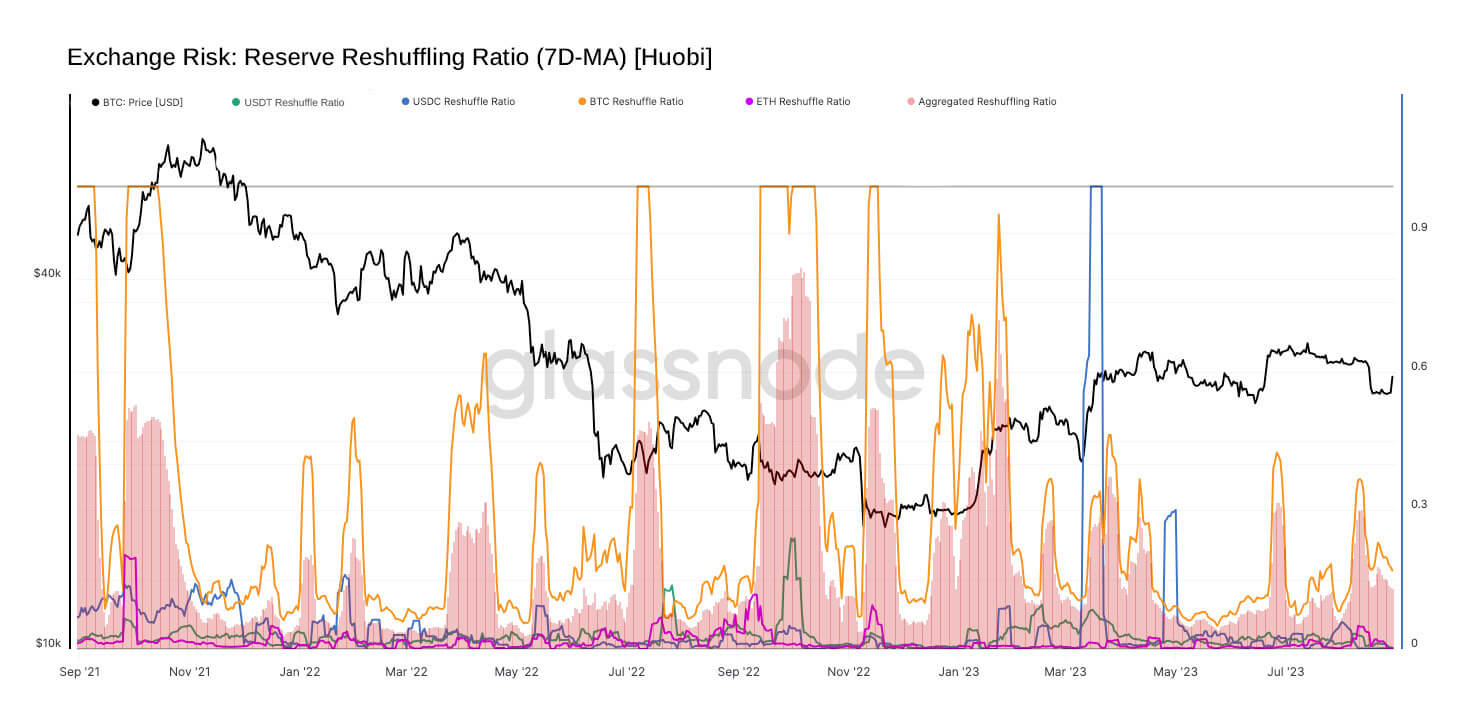
Huobi’s internal reshuffling ratio, which shows the proportion of an exchange’s balance transacted internally over a set period, mirrors that of Binance.
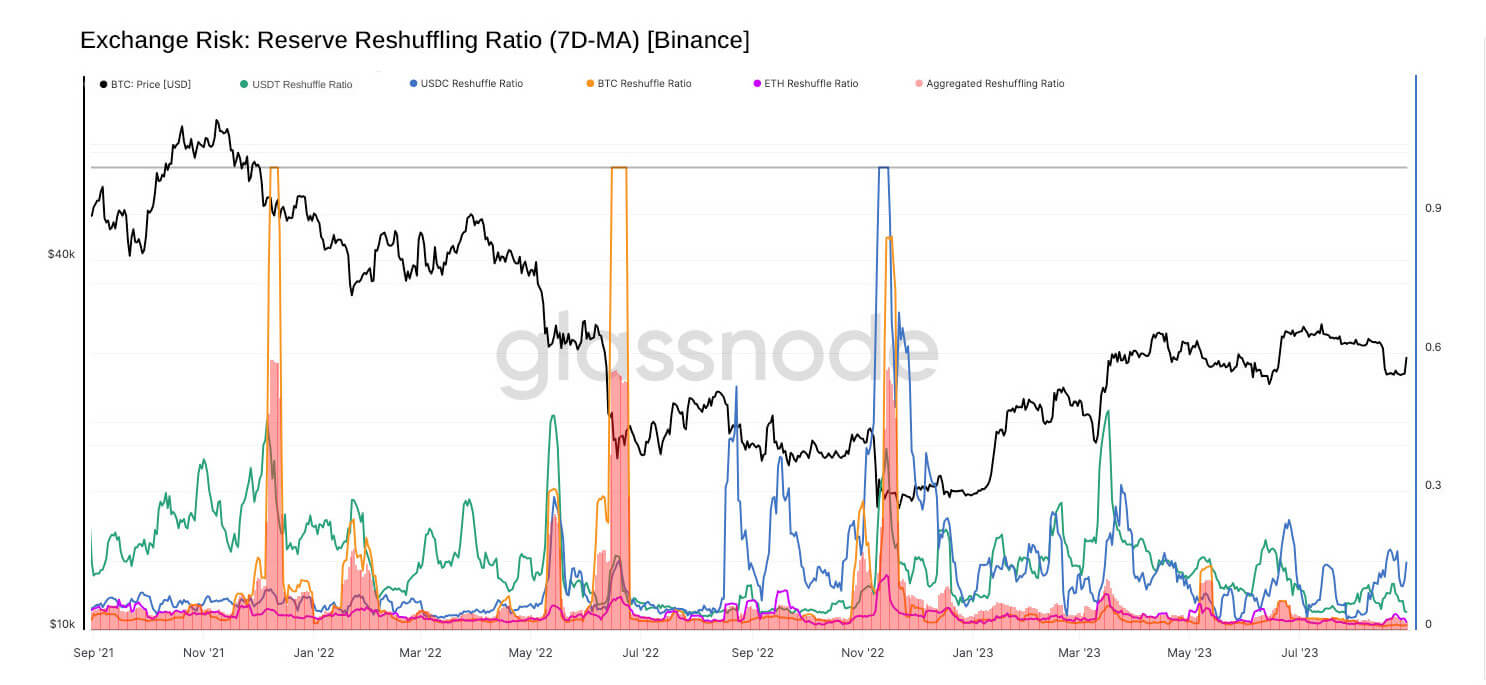
Binance's exchange reserve reshuffling ratio
Graph showing Binance’s exchange reserve reshuffling ratio from Aug.30, 2021, to Aug. 30, 2023 (Source: Glassnode)
Huobi's exchange reserve reshuffling ratio
Graph showing Huobi’s exchange reserve reshuffling ratio from Aug.30, 2021, to Aug. 30, 2023 (Source: Glassnode)

However, context is crucial here. Binance, the largest and most popular exchange on the market, dwarfs Huobi in every metric. Thus, the reshuffling spikes observed with Huobi could be magnified due to its depleting reserves.
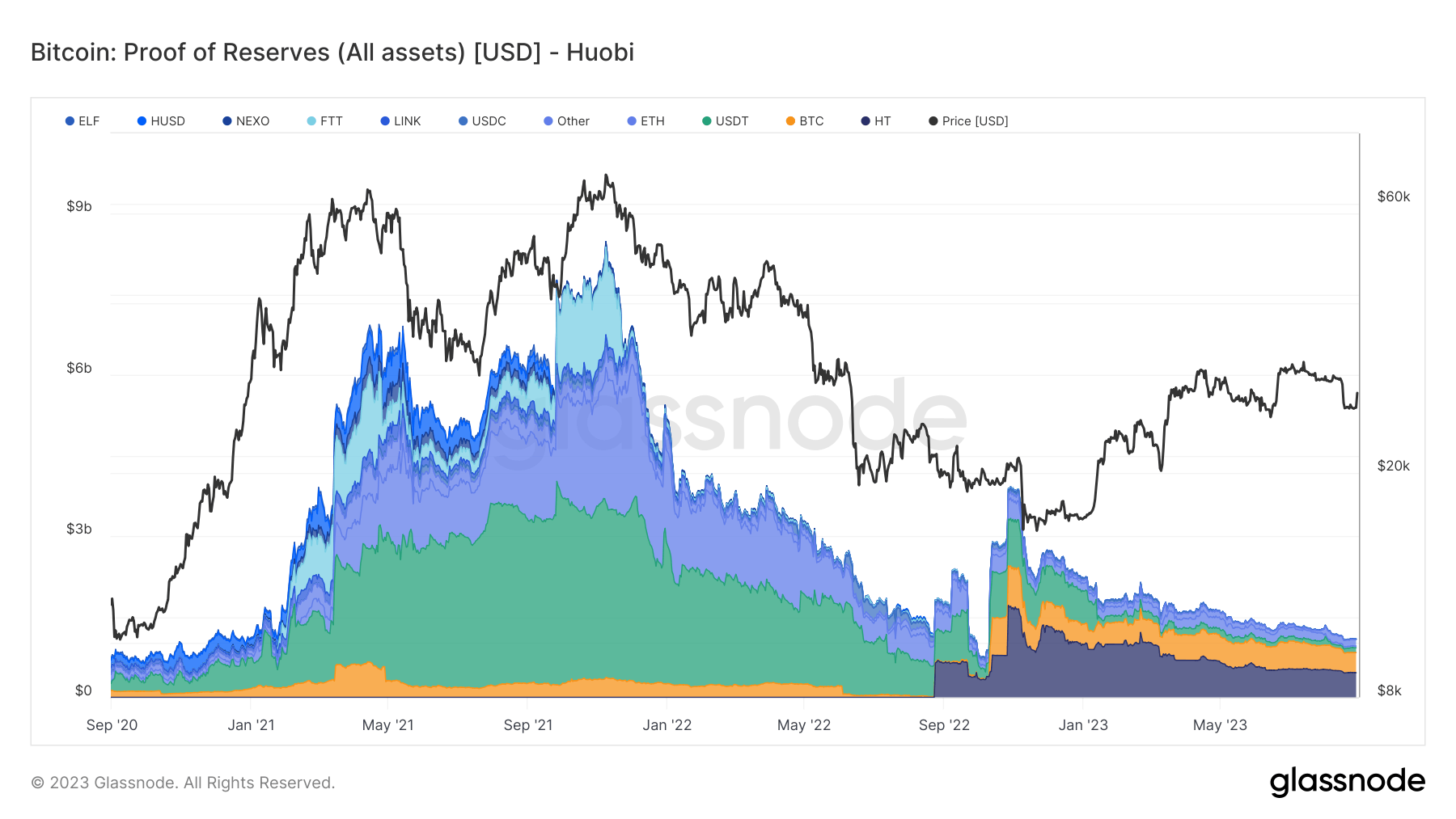
huobi proof of reserves 3y
Graph showing the total balance (in USD) of Huobi’s holdings from Aug. 2020 to Aug. 2023 (Source: Glassnode)

This connection between diminishing reserves and pronounced negative reliance ratios could be concerning. It suggests that assets are being moved internally with greater frequency and being transferred out of Huobi at a growing rate.

The correlation between Huobi’s dwindling reserves and its significant negative reliance ratios might indicate eroding confidence in the platform. While these metrics don’t definitively label an exchange as high-risk, the coming months will show if these indicators are passing anomalies or precursors to a more profound shift.

The post Huobi seeing increased outflows to competitors according to new reliance metrics appeared first on CryptoSlate.

Credit: Source link

Share. Facebook Twitter Pinterest LinkedIn Tumblr Email Reddit VKontakte Telegram WhatsApp

Related Posts

Bitcoin’s selloff is creating the short-heavy setup that could reverse it fast

June 4, 2026

Ethereum treasury giant offers 9.5% payout as BitMine paper losses top $8.5 billion

June 4, 2026

Zcash was rumored to have stopped working

June 4, 2026

Banks pushed Congress to kill stablecoin yield with CLARITY Act

June 3, 2026

Bitcoin returns to the price that capped 2021, defined 2024, and now tests the rally again

June 3, 2026

Bitcoin’s plunge to $65,000 has traders paying to protect against a fall to $50,000

June 3, 2026

Comments are closed.

Editors Picks

Sam Altman ChatGPT AI Predicts Wild Bitcoin Price by End of 2026

June 4, 2026

Bitcoin’s selloff is creating the short-heavy setup that could reverse it fast

June 4, 2026

Ethereum treasury giant offers 9.5% payout as BitMine paper losses top $8.5 billion

June 4, 2026

Hyperliquid Is Outperforming Solana on Price, But Can a Perps DEX Actually Flip a $38 Billion Network?

June 4, 2026
© 2026 - credbit.com - All Rights Reserved!
  • Contact Us
  • Disclaimer
  • Privacy Policy
  • Terms of Use
  • DMCA

Type above and press Enter to search. Press Esc to cancel.