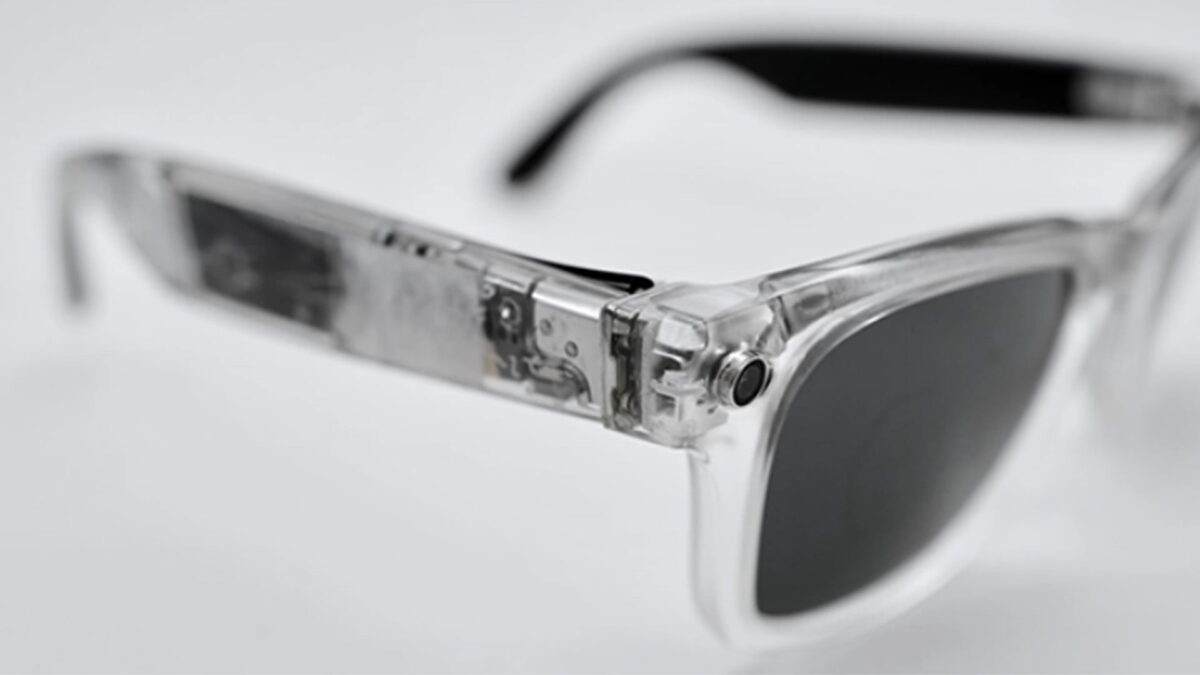
Bild: Meta (Ray-Ban Stories)
Meta’s first AR glasses will be very expensive to produce. One of the reasons for the high cost: the high-tech lenses and their domestic production.
Meta is expected to unveil its first real AR glasses, codenamed Orion, to the public sometime in 2024. The company plans to produce around 1,000 units and use them only for internal development and demonstration purposes, according to the latest report from The Information.
Originally, 50,000 units were to be produced and sold to the public before Meta changed its mind. That number of units is now planned for the second generation of the wearable, codenamed Artemis, which is reportedly set to launch in 2027.
Although Artemis is scheduled to launch about three years after Orion, it will use older, cheaper, and more proven technology for cost reasons: For the display, Meta will reportedly use cheaper LCoS technology instead of Plessey’s MicroLEDs, and the lenses will use glass instead of silicon carbide, resulting in a less bright image and a narrower field of view (50 degrees instead of 70).
According to current plans, the third generation of AR glasses, codenamed Odyssey, will also rely on glass, The Information reports.
Meta’s first AR glasses are “Made in USA”
The Information goes into detail about Orion’s manufacturing. According to the report, the first AR glasses will be made in the U.S. instead of Asia, where labor is much cheaper. The reason: The silicon carbide needed for the lenses, which is made by a U.S. company and has better optical properties than glass, is currently restricted from being exported to China. At the same time, a wristband and computing puck, both essential accessories for the AR glasses, will be manufactured in China and Taiwan.
Silicon carbide, a synthetic chemical compound, is expensive to produce. It is used, among other things, in space telescopes, electric vehicles, and radars and sensors of the US military.
According to the report, the AR glasses will be assembled at a former Hewlett-Packard printer factory near the Oregon-Washington State border. Manufacturing in the U.S. also has advantages for Meta, according to the report, as the factory is relatively close to the Reality Labs campus in Redmond.
AR Hardware: An expensive and risky venture for Meta
Meta is investing well over $10 billion a year in the development of the Metaverse, and about half of that investment goes into an augmented reality product that hasn’t even been released yet.
It’s easy to see from the report why this is an expensive proposition. And risky because no one knows yet if people will want to wear AR glasses on a daily basis. And even if they do: Profitability for Meta could be a decade or more away.
Meta’s AR plans also face hurdles in other areas, such as developing its own AR chips and AR operating system. These are important technological building blocks, the lack of which could hurt Meta’s competitiveness in the long run, especially in the face of Apple, which is better positioned in this regard.


Note: Links to online stores in articles can be so-called affiliate links. If you buy through this link, MIXED receives a commission from the provider. For you the price does not change.
Credit: Source link